
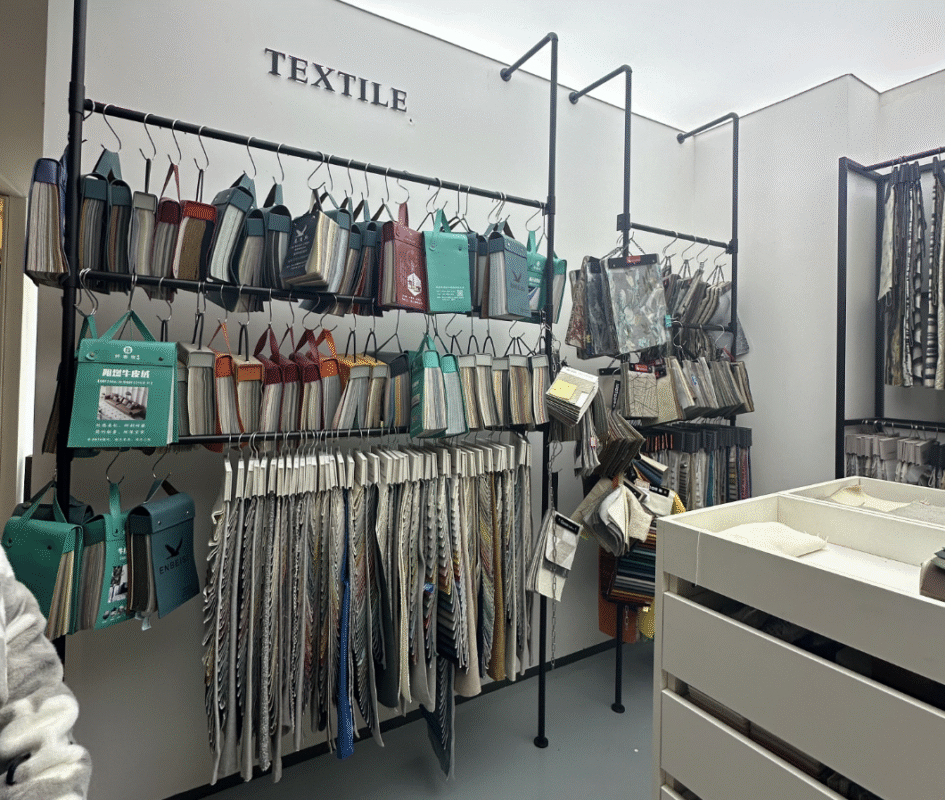
Fabric is decided by three questions, not by the swatch book: how hard the piece will be used, how often it will be cleaned, and how much the colour and texture matter in the room. In hotel and contract work the first two usually decide. In show flats and residential projects the third can lead.
The three questions
| Question | What it changes | What to ask for |
|---|---|---|
| 1. How hard is it used? | Abrasion resistance and pilling | Martindale rub count and fibre composition |
| 2. How often is it cleaned? | Whether it can be wiped or must be washed | Cleaning code, removable covers, stain treatment |
| 3. How much does appearance matter? | Texture, depth of colour, light fastness | Physical swatch, batch dye lot, light-fastness result |
Answer those three in writing and the shortlist usually falls to two or three fabrics. Choose from photographs alone and the fabric that photographs best is rarely the one that survives a lobby.
What each fabric family does well
| Family | Hand and look | Cleaning | Best used for |
|---|---|---|---|
| Velvet / cut velvet | Deep colour, soft pile, strong light response | Vacuum and dry clean; pressure marks show | Feature seating, headboards, low-traffic arms |
| Boucle | Looped texture, warm and tactile | Vacuum; loops can snag on keys and zips | Lounge chairs, occasional seating, residential |
| Chenille | Soft, matte, good drape | Dry clean or careful wet clean; can pill on heavy use | Sofas in residential and show-flat settings |
| Linen blend | Dry, natural texture, visible weave | Creases; needs a tolerant brief | Residential, show flats, decorative pieces |
| Performance fabric | Flatter hand, consistent colour | Wipeable, often bleach-cleanable | Hotel rooms, restaurants, family use |
| Leather / faux leather | Wipes clean, ages visibly, holds shape | Damp cloth; avoid solvent cleaners | Lobbies, reception, high-touch arms |
Contract use versus residential use
Contract and residential are not the same brief. A hotel lobby seat is used by hundreds of people a week and cleaned by a housekeeping team who will not read a care label. A show-flat sofa is used by almost nobody. The same fabric can be right for one and wrong for the other, and a supplier who does not ask which one you are buying for is guessing.
Where a market sets upholstery performance requirements, the report has to name the test and the result rather than the word “certified”. Our certification page lists the material reports we hold, with numbers and dates.
What to ask before you choose
- Fibre composition and, for blends, the percentage of each fibre
- Martindale or Wyzenbeek result, with the test method stated
- Cleaning code and whether covers are removable
- Light fastness, especially for pieces facing a window
- Whether the mill can hold a dye lot for a repeat order
- Any local upholstery performance requirement for the destination market
How fabric affects price and lead time
Fabric is usually the second-largest cost input after frame and foam, and the one most sensitive to availability. A stock fabric ships in days; a special order can add weeks and may carry a minimum quantity per colour. If a project needs 40 pieces in one colour across two phases, confirm the dye lot before the first order is placed, not after.
For the full picture of what moves a quote, see the five inputs that set the price.
Frequently asked
Which fabric is best for a hotel lobby?
Usually a performance fabric or a tight-weave chenille on the seats that take the most contact, with velvet or boucle kept to feature pieces. The decision follows cleaning routine more than appearance.
Is boucle suitable for contract use?
It can be, on seating that is not in constant contact, such as lounge corners and bedroom chairs. On lobby arms and reception seats the loops will snag, and a tight weave holds up better.
Can I supply my own fabric?
Yes, and we will confirm the metre requirement and cutting direction before production. Customer-supplied fabric is inspected on arrival, because a short shipment or a shade difference found mid-run stops the line.
How do I avoid colour differences between batches?
Order the full quantity against one dye lot and keep a retained sample. If a repeat order is likely, ask the mill to hold the lot at the time of the first order.
Written by the FEILIGE project team · Updated 11 November 2026 · Reviewed against current production and shipping records.
Next: what can be changed in a custom sofa, or see the fabric sofa range and how the pieces are built.

