Calm that survives daily cleaning

Postpartum centres, clinics and serviced care suites are residential in feel and institutional in use. Rooms are cleaned daily, families move through them all day, and the furniture has to stay quiet, soft-edged and easy to wipe without looking clinical.

This page follows the questions buyers ask on care projects — the same ones our team answers every week.

Typical brief

Send the room types and the scheme, or a reference image. We come back with models, cleanable fabric options and a room-by-room list.

Start a Project

What a care project includes

Dining table with two orange upholstered chairs in a postpartum care centre, FEILIGE project

In-room dining

Compact tables and wipe-clean chairs that fit a corner without blocking the room.

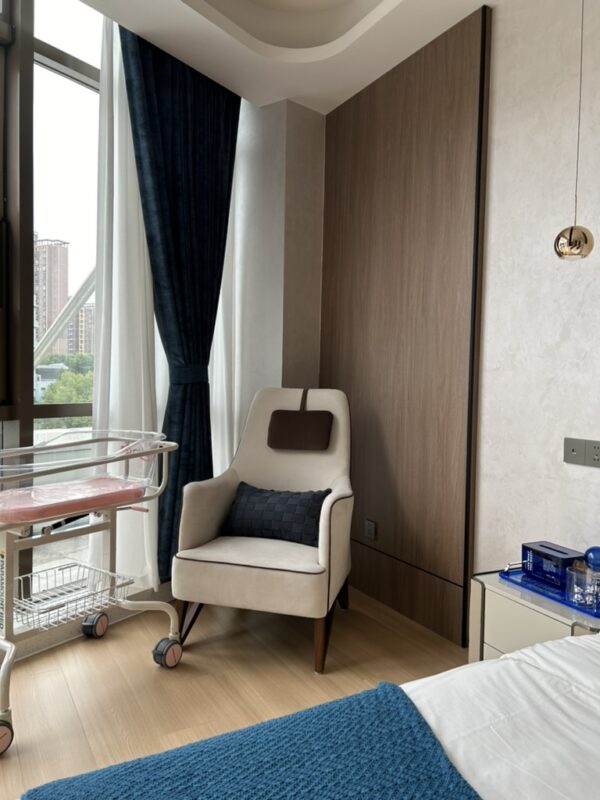
Upholstered accent chair in a postpartum care centre guest room, FEILIGE project

Lounge & reception

Soft-edged seating for waiting areas where families sit for long periods.

Questions buyers ask first

Grouped from the enquiries our sales team handles most often on care projects.

“Is the fabric easy to clean?”

It depends on the fabric, so we ask about the cleaning regime before recommending one. Technical fabric is the usual choice where rooms are wiped daily; chenille and linen blends are softer but need more care. Where the model and the fabric allow, covers can be removable.

“Will the colour match across the whole batch?”

Fabric is cut from the same dye lot where possible, and pile direction is marked on the drawing and checked on every unit. If the order runs long enough to need a second roll, we confirm the lot before cutting.

“What is inside the casegoods and the fillings?”

Casegoods are built with E1 board, and fillings use formaldehyde-tested wadding. Both reports are listed by number on the certification page, so a project consultant can verify them rather than take our word.

“Can the size be adjusted to the room?”

Straight runs can be adjusted by the metre; chaise sections are usually fixed. Send the room length and the door width and we will confirm what fits and what can be delivered.

“Can the piping run be identical on every chair?”

That is the detail we watch most closely on this type of order. The first approved chair sets the reference for the piping run and seam alignment, and the batch is checked against it — a few millimetres of drift is visible at close range.

“How long will it take?”

About 15 days for standard models, 20 days for flexible customisation, and 30 days for a new frame built from a drawing — counted from approved drawing and deposit. Seating and casegoods can be scheduled on one plan.

“What if something goes wrong after installation?”

Frame and foam carry a three-year warranty against collapse and deformation under normal use. Quality issues are repaired or replaced; transit damage is handled together with the carrier.

How the order is run

StageWhat happensTiming
Room reviewRoom types, clearances and the cleaning regime confirmed firstDay 0
Three-view drawingDimensions and structure approved before material is releasedBefore cutting
SamplePiping run, seam placement and fabric behaviour settled on one pieceBefore production
ProductionSeating in-house; casegoods from partner workshops to the same finish15 / 20 / 30 days by scope
InspectionEvery unit checked against the reference pieceBefore packing
PackingSeating in woven bags, casegoods crated, consolidated into one shipmentBefore dispatch

On-time delivery rate: 98%, with progress reported every three days.

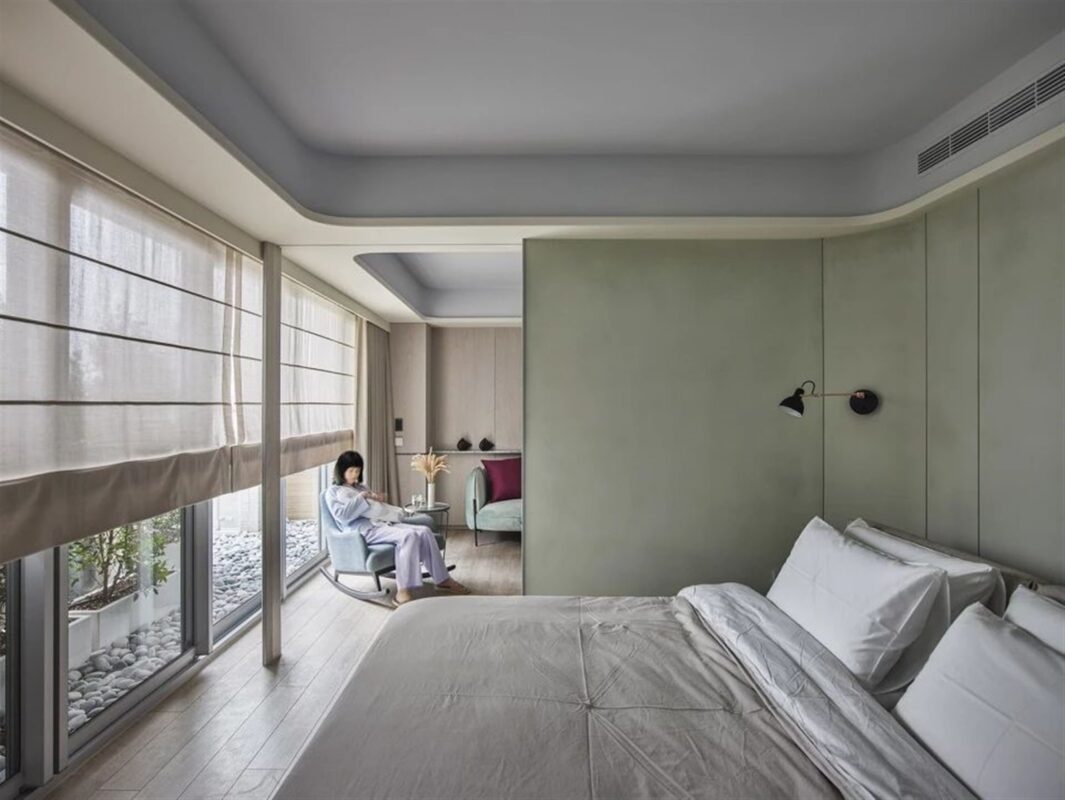
Postpartum care suite with upholstered bed and seating

A postpartum centre in Shanghai

Guest rooms and in-room dining corners: upholstered accent chairs with contrast piping, dining chairs, and casegoods including the TV console.

The case shows how the piping reference was held across the batch and how seating and casegoods were consolidated into one shipment.

Read the case
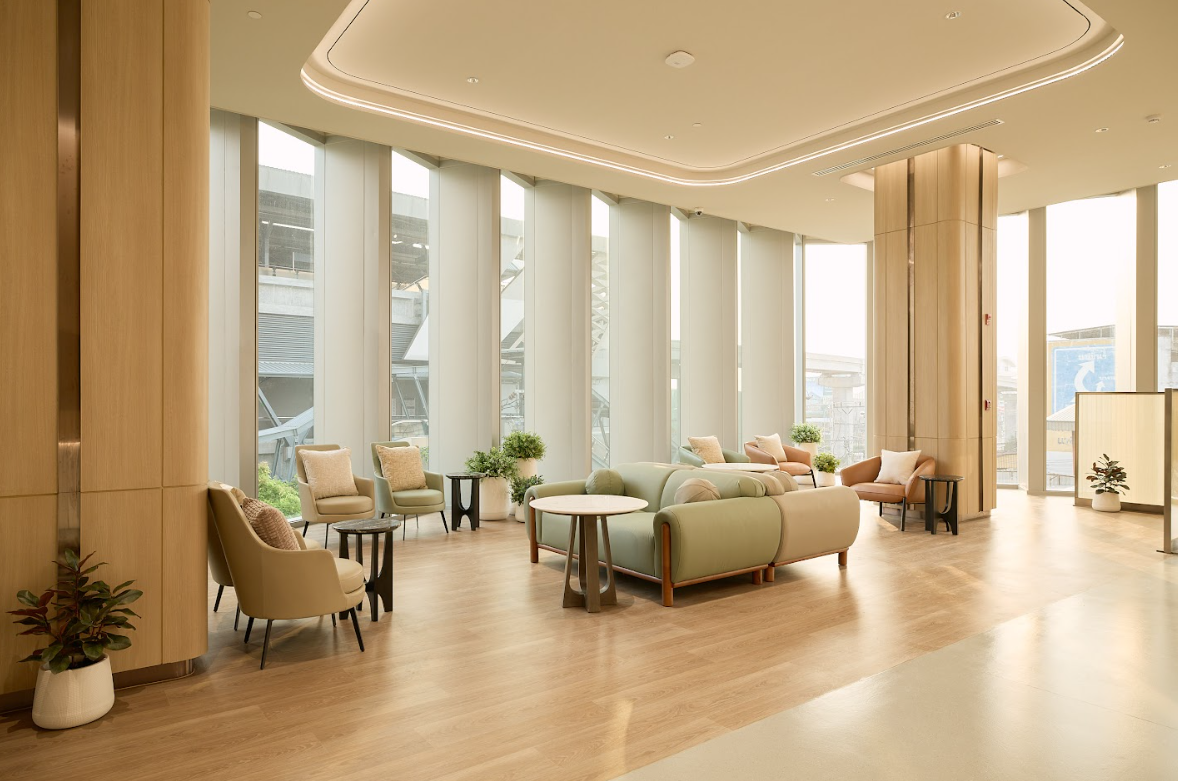
Hospital waiting lounge in Thailand with sofa groups and lounge chairs, FEILIGE project

A private hospital in Thailand

VIP patient rooms and premium waiting areas: custom upholstered sofas and lounge chairs kept in one palette of cream, muted green and warm brown, across spaces of different size.

The case shows how one seating language was held from a large waiting lounge down to a window-side pair of chairs, and how the palette was approved on physical samples.

Read the case

Materials and verification

E1 board report CKJC250913CN01-3 and wadding formaldehyde report SDHL2406010479FT-1 are listed on the certification page. Frame and foam carry a three-year warranty against collapse and deformation under normal use.

100% inspection

Every piece checked before packing, against the first approved unit.

E1 board

Casegoods built with E1 board for interior air quality.

Formaldehyde-tested wadding

Fillings specified with tested wadding, report number available.

Tell us about the rooms

Room types, quantities and the cleaning regime are enough to start. We reply within 24 hours on working days.

Request a Quote

Case notes in this programme

See all delivery notes on the projects page, or browse the product range.