
A hotel furniture order is decided by six documents, not by a showroom visit: the FF&E schedule, a dimensioned drawing, an approved sample, a packing list, a test report set, and the inspection record. Agree them in that order and the order runs on time. Skip one and the delay usually shows up at the container, not at the quotation.
The six documents
| Document | What it fixes | When it is needed |
|---|---|---|
| FF&E schedule | Model, quantity, room type, finish per location | Before quotation |
| Dimensioned drawing | Overall size, seat height, depth, leg profile | Before production |
| Approved sample | Foam feel, seam, colour under light, hardware | Before the bulk run |
| Packing list | Cartons, volume, gross weight, marks per room | Before loading |
| Test report set | Upholstery and material evidence for the destination market | Before shipment |
| Inspection record | Unit-by-unit check result before packing | At packing |
1. FF&E schedule and quantities
The schedule is the only document that tells a factory what to build and in what mix. A hotel order is rarely one model: a 120-room property typically needs lobby seating, guest-room chairs, beds, bedside units and occasional tables from the same brief. Send the schedule with room types and quantities per line, not a total piece count, because packing and loading are planned per room so that site delivery follows the installation sequence.
2. Dimensioned drawing
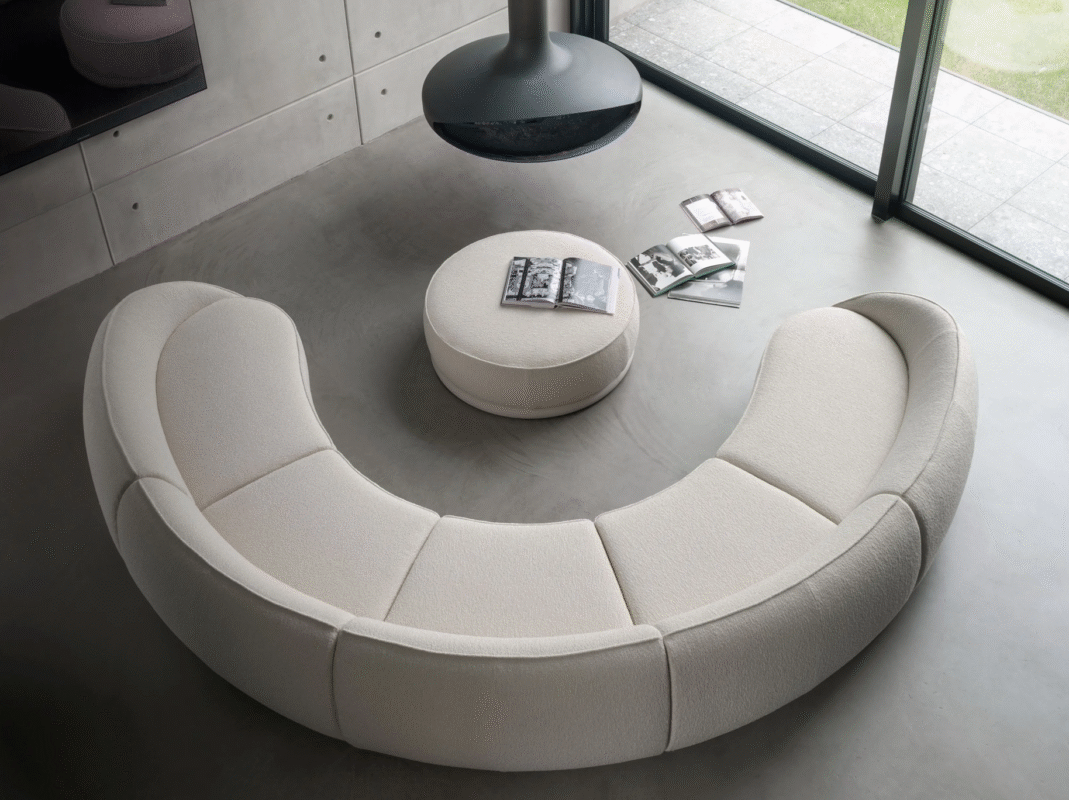
A photo sets the look; a drawing sets what can actually be built. On a curved sofa the drawing fixes the radius, the seat height and the depth, and those three numbers drive frame geometry and foam volume. Where a project supplies only a reference image, we confirm dimensions against a drawing before pricing, and the quotation states which dimensions are fixed and which remain open.
3. Sample approval
The approved sample becomes the reference for every unit in the run. Approve it under the lighting it will live in: a fabric that reads warm in a Foshan workshop can read grey in a Dubai lobby. Record the sample date, the fabric reference and the foam grade on the approval sheet, because that sheet is what an inspector compares against six weeks later.
4. Production and inspection
Production at the QIYU base covers frame, foam, upholstery and assembly in one building, which is why a mid-run change is possible but a mid-run change of frame geometry is not. Every unit is checked before packing; the check covers frame squareness, seam alignment, foam recovery and hardware function. A 98% on-time delivery rate is measured against the confirmed ship date, not the enquiry date.
5. Packing and loading
Hotel orders load by room, not by model, so that the container can be unpacked floor by floor. The packing list states carton marks per room type, packed volume and gross weight. Volume planning matters more than piece count: a three-seat sofa packs to roughly 1.2–1.5 CBM, a lounge chair to 0.4–0.6 CBM, and a 40HQ carries about 65 CBM of usable space.
6. Documents for clearance
Export packing, packing list and certificate of origin travel with the container. Where the buyer needs to confirm what a management-system claim covers, the ISO 9001 definition is a useful reference: it describes a quality management system, not a finished-goods test. Where the destination requires upholstery evidence, the test reports are matched to the material actually used in that run, which is why report numbers are listed with dates rather than described in general terms.
Where hotel orders usually slip
- The schedule arrives after the sample. Quantities change, packing is replanned, and the ship date moves.
- Dimensions are confirmed verbally. The first container arrives with a 45 cm seat height instead of 42 cm.
- The sample is approved in the wrong light. Colour disputes appear at installation, not at inspection.
- Packing is planned by piece count. The container is declared full at 52 CBM of a possible 65.
How FEILIGE and QIYU split the work
FEILIGE is the international sales and project service company, established in 2020. Manufacturing is carried out by QIYU, established in 2010, in the same building in Longjiang, Shunde, Foshan: 11,000 m² in total, of which 8,000 m² is production and 2,000 m² is showroom, with capacity above 200,000 pieces per year. QIYU operates ISO 9001, ISO 14001 and ISO 45001 management procedures. Minimum order is five pieces per model, and models and colours can be mixed in one order.
Frequently asked
How long does a hotel furniture order take?
Standard models run about 15 days, flexible customisation about 20 days, and orders built from a new drawing about 30 days. The clock starts when the drawing is confirmed and the deposit is received, not when the enquiry is sent.
Can one container mix several models?
Yes. The minimum is five pieces per model, and a mixed container is normal for hotel work because each room type needs a different mix.
What if the project has only a reference photo?
We confirm dimensions against a drawing before quoting, and state in the quotation which dimensions are fixed and which remain open. A photo alone is never treated as a specification.
Where can I check the test reports?
Report numbers, certificate numbers and validity dates are listed on our certification and compliance page.
Written by the FEILIGE project team · Updated 11 November 2026 · Reviewed against current production and shipping records.
Next: how packing and container loading change the plan, or what to check in a factory audit. See also furniture solutions by project type and project applications.

