
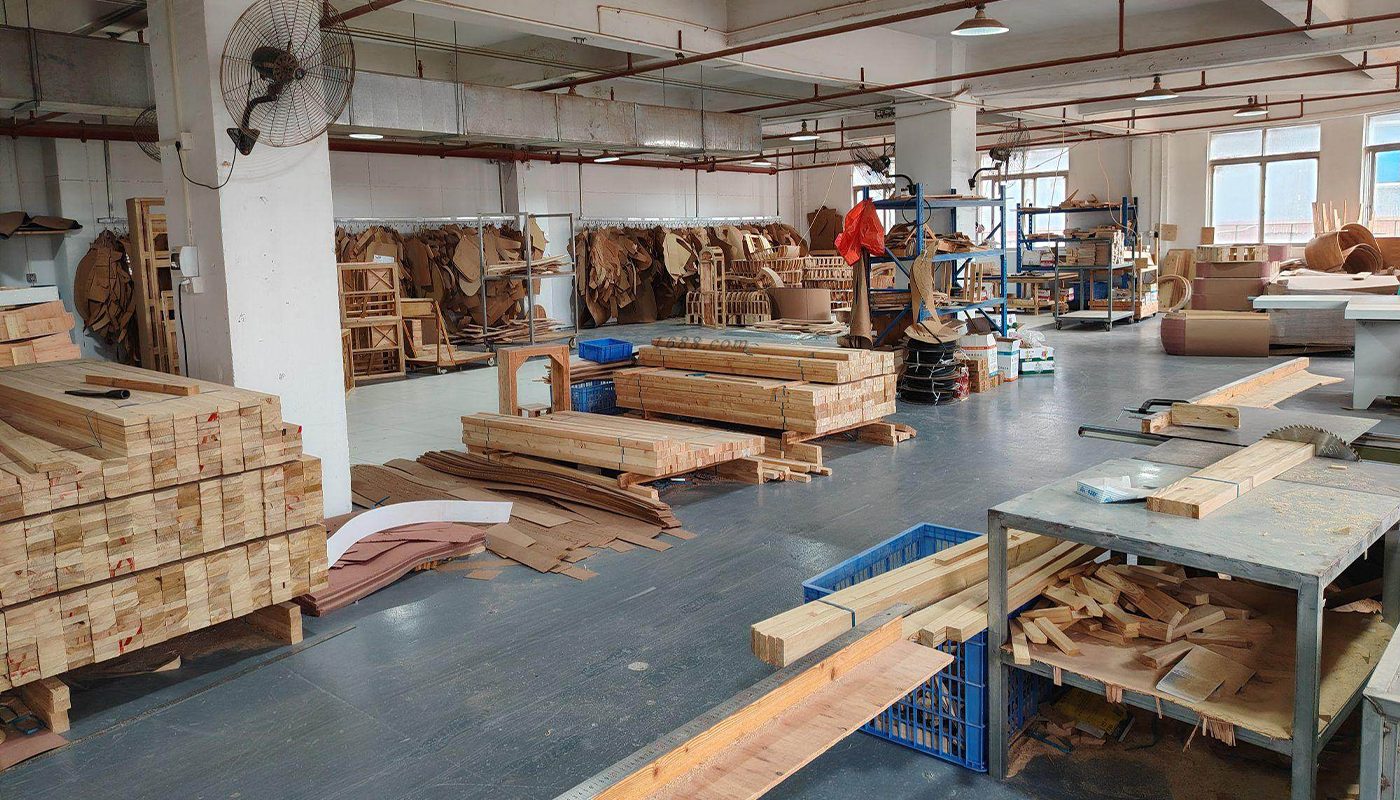
Fifteen days for a standard model, twenty days with customisation, thirty days from an approved drawing — counted from drawing approval and deposit, not from the enquiry. Most “late” orders are not late in production; they are late in approval, fabric confirmation or a change made after cutting. Knowing where the clock starts is the difference between a plan and a hope.
The three clocks
| Scope | Clock | Starts when | Typical trigger for delay |
|---|---|---|---|
| Standard model | 15 days | Order confirmed, fabric in stock, deposit received | Fabric not in stock |
| Customised model | 20 days | Drawing approved and deposit received | Late approval, change after cutting |
| Custom from drawing | 30 days | Approved three-view drawing and deposit | New patterns, sample approval |
Where the days go
Drawing and approval. A three-view drawing is issued within one working day; the days after that belong to the approval, not the factory. A drawing that sits unsigned for a week adds a week to the schedule.
Materials. Fabric in stock moves immediately; a special order can add days depending on the mill. Foam and timber are usually in stock; a non-standard foam density may not be.
Frame and foam. Cutting, jointing and assembly run in sequence. A curved frame has more joints than a straight one, and the joint method affects the time as well as the price.
Sewing and upholstery. Panels are sewn before they meet the frame, and the cover is pulled by hand along the radius. This is the least compressible part of the schedule.
Inspection and packing. Final inspection is 100% and covers symmetry, seams, hollow spots, pile direction and rebound. Packing a curved piece takes longer than a straight one because it does not nest.
What actually delays a project
- Late drawing approval. The most common cause, and the easiest to fix.
- Fabric not confirmed. A “we’ll decide later” fabric becomes a two-week delay at cutting.
- Changes after cutting. A new radius or a new fabric after the frame is built is a new run.
- Peak season. Line capacity is finite; a date accepted in a quiet month may not be available in a busy one.
- Second dye lot for a phased project. Ordering fabric per phase instead of for the whole project can add a production stop.
How 98% on-time is measured
We measure against the ship date written in the order confirmation, not against the original enquiry. The follow-up runs every three days, so a slip is visible before it becomes a missed date. If a date cannot be held, we say so before the order is accepted rather than after the container is booked.
How to protect an opening date
Approve the drawing early, fix the fabric quantity for the whole project, and stage production rather than re-ordering. If the opening date is fixed, tell the supplier before the mix is agreed; the total lead time is set by the last item, not the first. For a hotel project, work backwards from the installation date, not forwards from the order date.
Questions buyers ask
Can you rush an order?
Sometimes. It depends on fabric stock and line capacity. Send the target date and quantity; we confirm within one working day whether it can be held.
Does a sample add to the lead time?
Yes, if the sample is approved before production. The sample runs on its own short cycle, and the production clock starts after approval — the two are sequential, not parallel.
Is the 15-day clock calendar days or working days?
Calendar days from drawing approval and deposit, unless the order confirmation states otherwise. Chinese public holidays are excluded and listed in the confirmation.
What happens if production slips?
You are told as soon as the slip is known, with the reason and a revised date. The follow-up record is shared every three days, so the slip is visible before the ship date, not after.
Send the model, quantity, fabric status and target date, and we will confirm the applicable clock and the ship date in writing. Sampling and MOQ answers are in the FAQ; the production sequence is on the craft page.
Updated November 2026. FEILIGE FURNITURE, Foshan.

