The customer who had already been let down once

He came to us with a restaurant to finish and a decision already made: he was not going to be caught twice. Before that first message, he had bought from China and what arrived was not what he had paid for.

What that does to a buyer

It makes every question heavier. He wanted to know who would make the chairs. He wanted to see the fabric before it was cut. He wanted a drawing, not a description. He asked what would happen if something arrived damaged, and who would be responsible for the truck. He did not want reassurance — he wanted proof, one step at a time, before he released the next one.

That is not a difficult customer. That is a customer who has already paid for someone else’s mistake.

What we did about it

We answered the questions in the order he asked them. Nothing moved forward until he had seen it: the three-view drawing for the chairs, the fabric and the embroidery position against the interior palette, the wall measurements for the banquettes. When production started, we sent progress every three days — photos and video, not a status line. When a detail needed a decision, we raised it there and then, not at packing.

Before shipping, every unit was checked: frame, upholstery alignment, embroidery position, table tops. Then the packing, and then the part most suppliers leave to the buyer: we chose the trucking company ourselves and picked the driver we would trust with the order.

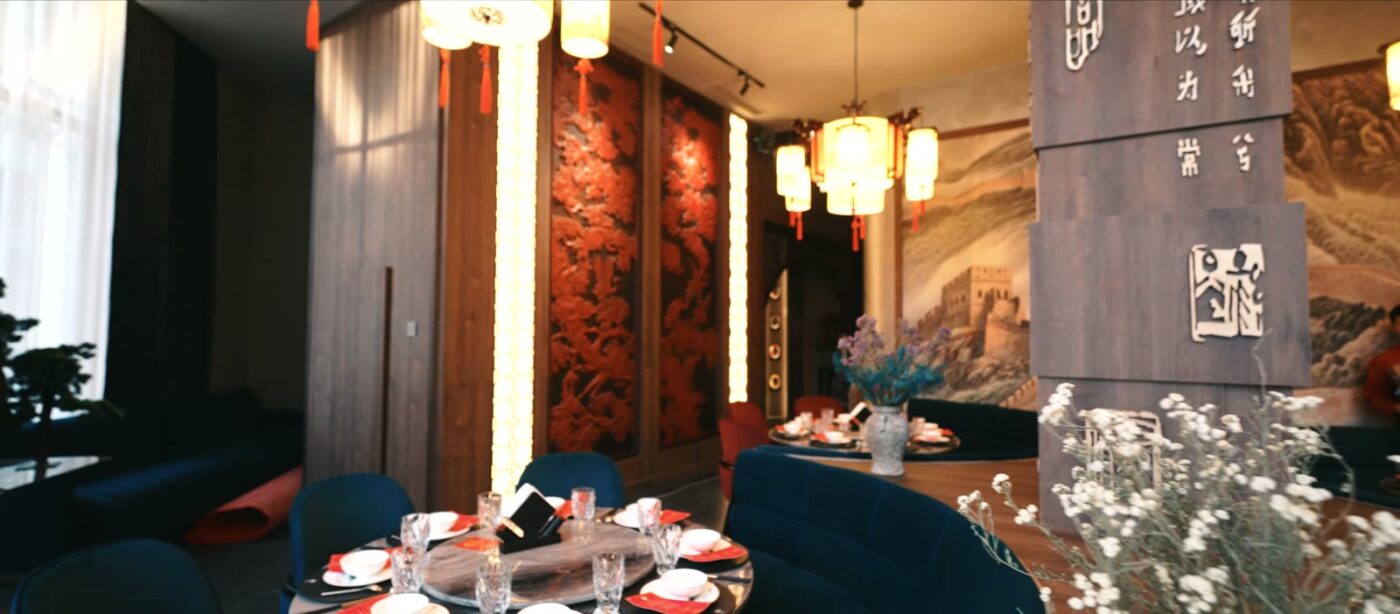
Round dining table with teal velvet chairs and banquette seating

Private dining room, after handover — round table, upholstered chairs and banquette seating.

The part we said no to

After the opening, he asked us to buy the tableware as well — the bowls, the plates, the pots. It would have been an easy yes, and a bigger order. We said no.

We make furniture. The tableware comes from a supply chain we do not control, and his opening date was already fixed. Adding a category we cannot inspect properly would have put his restaurant at risk to make our invoice larger. Saying no cost us the order; it kept the thing we actually sell — that when we say an order will arrive complete and correct, it does.

How the order was run

Drawing firstSeat counts and reference details turned into a three-view drawing. Nothing cut before sign-off.
Fabric and finishTeal upholstery and embroidery confirmed against the interior, then cut from one lot for the whole order.
Wall-built banquettesBuilt to measured wall runs, with cushions made as separate removable units.
Progress every three daysPhotos and video through production; decisions raised while they were still cheap to make.
100% inspectionEvery unit checked before packing, not a sample of the batch.
Packing and truckingExport packing over timber frames, and a carrier chosen by us rather than by price.

What came back

The order arrived complete and undamaged, and matched what had been approved on paper. He sent us the video from the opening night — the room we had been measuring in drawings for months, finally full of people.

He has stayed in touch since. That is the part we would rather be judged on than any photograph of a chair.

If a supplier has already let you down

Start smaller than you think you need to. Send one drawing, one room, one item list with the destination. We will send back a dimension check and a production plan before you commit to anything larger.

Send a project brief

This project belongs to Restaurants & Cafés — dining chairs, banquette seating and tables produced on one finish schedule.

This note covers how the order was run. The links below lead to the product families used in this kind of fit-out, and to comparable models in the current range — they are references for specification, not a bill of materials for this project.

Product families

Comparable models: QY-C2003, QY-T82504, QY-C21202.

Related: Restaurants & cafes programme · all project notes · the full product range · send a room plan.